
Share this product :
Aluminium Chloride
- Origin
- : India, China
- CAS Number
- : 7446-70-0
- HS Code
- : 2827.32.00
Basic Info
- IUPAC Name
- : trichloroalumane
- Molecular Formula
- : AlCl3
- Molecular Weight (g/mol)
- : 133.3400
- InChIKey
- : VSCWAEJMTAWNJL-UHFFFAOYSA-K
- InChI
- : InChI=1S/Al.3ClH/h;3*1H/q+3;;;/p-3
- Synonyms & Trade Names
- : ALUMINUM CHLORIDE; Aluminium chloride; Aluminum trichloride; Aluminium trichloride; trichloroalumane; Trichloroaluminum; Aluminum chloride anhydrous; Pearsall; Aluminiumchlorid; TK Flock; Chlorure d'aluminium; Aluminum chloride (1:3); Alluminio(cloruro di); Caswell No. 029; Aluminium, (chlorure d'); Aluminum chloride, anhydrous; Aluminum chloride (anhydrous); aluminium(III) chloride; Aluminum, (chlorure d'); trichloridoaluminium
- Purity / Assay (%)
- : 99% min
- Grade / Quality Level
- : Technical Grade
- Physical Form
- : Solid
- Concentration
- : Pure substance
- Appearance / Color
- : White when pure; ordinarily gray or yellow to greenish
- Odor
- : STRONG ODOR OF HYDROGEN CHLORIDE
- Melting Point (°C)
- : 190.0000
- Boiling Point (°C)
- : 182.7 °C at 752 mm Hg /Sublimation temperature/
- Density (g/cm³)
- : 2.4400
- Solubility in Water
- : Solubility in water: reaction
- Signal Word
- : Danger
- UN Number
- : 1726, 2581
- GHS Hazard Class
- : Skin corrosion/irritation, Corrosive to Metals, Serious eye damage/eye irritation, Acute toxicity, oral, Germ cell mutagenicity, Reproductive toxicity, Specific target organ toxicity, repeated exposure
- H-Statements
- : H314
- P-Statements
- : P260
- REACH Status
- : Registered
- Drug Precursor Status
- : Non-precursor
- Storage Class (GHS)
- : 8
- Storage Conditions
- : For more Storage Conditions (Complete) data for ALUMINUM CHLORIDE (7 total), please visit the HSDB record page.
- Industry Usage Tags
- : Processing aids not otherwise specified
Categories
Share this product :
About Aluminium Chloride
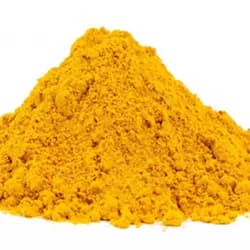
Aluminium chloride, AlCl3, is well-known as a catalyst for organic reactions. This compound is soluble in water, hydrogen chloride, ethanol, chloroform, CCl4 and is slightly soluble in benzene. It is a silver-white powder but sometimes turns to yellow if it is contaminated by ferric chloride. It tends to absorb water easily (hygroscopic) to form monohydrate or hexahydrate. Aluminium chloride is a corrosive substance and it is also very toxic. It can cause high damage to the eyes, skin, and respiratory systems if inhaled or upon contact.
Aluminium chloride is widely used for Friedel-Crafts reaction as a catalyst. AlCl3 works as an electron acceptor (Lewis Acid). AlCl3 is able to direct the reaction more efficiently and effectively. This catalyst is used to synthesize alkyl benzene from alkyl halide and benzene. It is also used for many industrial applications such as petrochemical manufacture, pharmaceuticals, dyes intermediates, and other organic chemicals. Moreover, it can be used for the metallurgical industry, cosmetics, antiperspirants, metallurgical industry, and lubricants.
Manufacturing Process
There are mainly two ways of synthesis: manufacturing aluminium chloride with chlorine or hydrogen chloride, or obtaining aluminium chloride by extraction from raw materials. In the former method, aluminium chloride is widely manufactured by reacting with an aluminium metal with chlorine or hydrogen chloride. This reaction occurs at a temperature ranging from 650 to 750°C and is classified as an exothermic reaction. In the latter method, to produce aluminium chloride, the aluminium metals can be extracted from raw material, such as clay or fly ash.
The preferred method of preparing anhydrous aluminium chloride comprises the steps of:
Alumina raw materials, such as clay, undergo the drying and calcining process to activate the alumina fraction for HCl leaching;
Dissolving the alumina fraction into soluble aluminium chloride by HCl leaching of calcined clay.
Solid/liquid separation to obtain remove all the solid that still contain in aluminium chloride solution, typically by the use of settlers and/or filters;
Separation of any soluble iron chloride from process liquor;
Crystallization of filtrate to separate slurry from aluminium chloride hexahydrate crystals;
Heating the aluminium chloride hexahydrate crystals to a temperature up to about 450°C.
Reducing aluminium chloride hexahydrate crystals to form anhydrous aluminium chloride.
Other ways of manufacturing aluminium chloride are:
Reaction of aluminum metal in a heated stream of hydrochloric acid gas
2 Al + 6 HCl → 2 AlCl3 + 3 H2
Reaction of bauxite with coke and chlorine at about 875°C
Catalytic chlorination of gamma-alumina in a fluidized bed


